


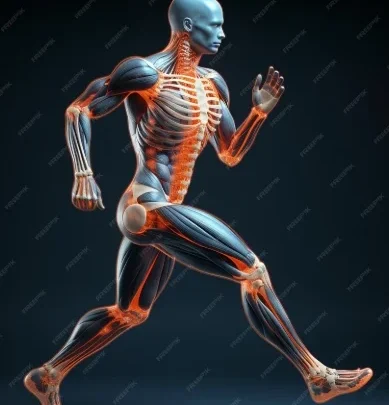

Understanding Anatomy Movement Gear Trains in the Body Dennis Bartram
“Discover How Joints and Muscles Optimize Movement Through Anatomy Movement Gear Trains.”
 Introduction to Anatomy, Movement, Gear Trains. Gear trains can be applied to our bodies, particularly how our limbs move.
Like a mechanical gear train, our bodies operate through a complex system of interconnected gears that transmit motion and force. This understanding illuminates the intricate nature of human movement.
In biomechanics, our joints and muscles act as gears that work harmoniously to facilitate movement.
This understanding is crucial for anyone interested in improving their physical performance or recovering from injuries.
We can enhance our movement efficiency and overall health by recognizing how our bodies function like a gear train.
Anatomy Movement Gear Trains The Foot: Foundation of Movement
We can start with the foot when discussing gear trains in the body. The foot, much like the base of a machine, serves as the solid foundation for our movements, anchoring us in our understanding of the body’s mechanics. When the foot contacts the ground, it initiates a series of movements that travel up through the body.
For instance, when the foot touches the ground, it sends signals to the tibia and talus, initiating a rotation that travels up through the femur. This rotation affects the iliac bones and the lumbar spine, preparing the body for propulsion.
Understanding this kinetic chain is essential for analyzing how movements are initiated and executed. If we neglect the importance of the foot, we may overlook significant factors that contribute to our overall movement efficiency.
Anatomy, Movement Gear Trains, Role of the Ankle in Motion
The ankle plays a crucial role in this kinetic chain. Acting as a pivot point, it allows for flexibility and stability. When the foot strikes the ground, the ankle absorbs shock and helps to distribute forces throughout the leg. This action is vital for maintaining balance and ensuring the body can move efficiently.
If the ankle is weak or injured, it can disrupt the entire kinetic chain, leading to compensatory movements and potential injuries in other areas. For example, an unstable ankle may cause the knee to bear more stress, increasing the risk of injury. Therefore, strengthening the ankle is essential for overall body mechanics.
The 21-Day Mobility Reset ‘See Here’
It is designed specifically for the post-50 joint, addressing the root cause of friction, not just masking the pain.
The arm functions similarly to a gear train. When we lift our arm, the wrist, elbow, and shoulder work together in a coordinated manner. Each joint plays a specific role in facilitating movement. For example, the shoulder initiates the movement, while the elbow and wrist adjust to complete the action.
This interconnectedness means that issues in one area can affect the entire system. For instance, a wrist problem may stem from an underlying shoulder issue. By understanding the arm as a gear train, we can identify the source of the problems and develop targeted rehabilitation strategies. This holistic approach is crucial for effective treatment and recovery.
The Elbow’s Contribution to Anatomy, Movement, Gear Trains
The elbow is another key player in the arm’s gear train. It acts as a hinge, allowing for flexion and extension. When the shoulder lifts the arm, the elbow bends to position the hand effectively. This coordinated movement is essential for reaching, lifting, or throwing tasks.
If the elbow is dysfunctional, it can hinder the arm’s overall performance and lead to compensatory movements in the shoulder or wrist. Recognizing the elbow’s role in the kinetic chain helps us understand how to address issues that arise from elbow injuries or dysfunction.
Identifying Problems in the Anatomy Movement Gear Trains
Recognizing how movements in the arm affect the wrist and elbow is crucial for diagnosing issues. For example, if a patient presents with wrist pain, it is essential to assess the shoulder and elbow for potential contributing factors.
By viewing the body as a cohesive unit, we can develop a more comprehensive understanding of movement and dysfunction. This will empower us to address the root causes of pain and develop effective treatment plans.
This approach allows us to address the root causes of pain and develop effective treatment plans. Instead of merely treating symptoms, we can focus on the body’s interconnectedness to promote long-term recovery and improved function.
The Kinetic Chain and Its Importance
The kinetic chain refers to the interconnected system of joints and muscles that work together to move. Understanding the kinetic chain is essential for analyzing how forces are transmitted through the body. For example, when we run, the movement starts at the foot and travels up through the ankle, knee, hip, pelvis, and spine.
Each joint and muscle transfers forces and maintains stability. If one part of the kinetic chain is compromised, compensatory movements and potential injuries can result. Recognizing the importance of each component in the kinetic chain helps us appreciate the complexity of human movement.
The Impact of Weakness in the Kinetic Chain
Weakness in any part of the kinetic chain can have a domino effect. For instance, if the hip is weak, it can lead to instability in the knee and ankle. This instability can cause improper movement patterns, increasing the risk of injury.
By strengthening each component of the kinetic chain, we can enhance overall performance and reduce the likelihood of injuries. Strengthening exercises targeting the hips, knees, and ankles can improve stability and function significantly. Training should focus on the kinetic chain rather than isolating individual muscles or joints.
Anatomy Movement Gear Trains So Far So Good
In this article, we explored the concept of gear trains in the body and how they relate to movement. Understanding the interconnectedness of the upper extremities is essential for identifying and addressing shoulder, elbow, and wrist issues. This knowledge is not only beneficial for athletes but also for anyone looking to improve their daily function and mobility.
By grasping these concepts, we can improve our understanding of biomechanics and enhance our physical performance.
Understanding Anatomy, Movement Gear Trains
In summary, the body operates like a complex gear train, with each joint and muscle playing a vital role in movement. By recognizing how these components work together, we can better understand our bodies and address any issues.
Whether you’re an athlete or looking to improve daily function, understanding the principles of gear trains can lead to better movement patterns and overall health.
Stay tuned for the following article, in which we will explore the anatomy of the shoulder and its significance in our kinetic chain more fully.
By continuing to learn about these concepts, we can enhance our physical capabilities and prevent injuries, leading to a healthier, more active lifestyle.


